It happens to the best of us. You’re ten minutes away from walking out the door for a dinner date or a big meeting, you glance in the mirror, and you see it: the lace at your temple has started to lift. Or perhaps you catch a glimpse of your reflection in harsh lighting and notice your hairline looks a little too “perfect”—a dense, straight line that screams “wig” rather than “growing from the scalp.”
These moments of panic are a normal part of the wig-wearing journey. While we all strive for that undetectable finish, the reality is that friction, skin chemistry, and simple wear-and-tear can disrupt even the best application. While a comprehensive guide on how to achieve a flawless, natural wig hairline can set you up for success from the very first install, knowing how to troubleshoot issues when they arise is what truly separates the novices from the pros. Whether you are dealing with lifting lace, unnatural edges, or fraying material, understanding the “why” behind the problem is the first step to fixing it.
The Anatomy of a Perfect Hairline
Before we dive into the fixes, we need to understand what we are trying to replicate. If you look closely at a biological hairline, you will notice it is rarely a solid wall of hair. It is imperfect.
A natural hairline is graduated. It starts with fine, sparse “baby hairs” and gradually becomes denser as it moves back toward the crown. It is also irregular; perfectly straight lines rarely exist in nature. When a wig looks “wiggy,” it is often because the hairline is too dense right at the edge, or the lace creates a visible ridge against the skin. Understanding this anatomy helps us realize that troubleshooting isn’t just about gluing things down harder—it’s about mimicking nature.
Issue 1: The Dreaded “Lift” (And How to Fix It)
Lifting is the most common complaint among lace wig wearers. You might apply your wig perfectly in the morning, only to find the edges peeling up by midday.
The Science of Lifting
To stop lifting, you have to understand the lace lifting meaning in the context of skin chemistry. Your skin is a living organ that produces sweat and oils (sebum). Over time, these fluids work their way between the lace and your skin, chemically breaking down the bond of the adhesive or gel. It’s similar to putting a sticker on a surface that slowly becomes oily—eventually, the sticker loses its grip.
The 5-Minute Emergency Fix
If you are out and about and notice a lift, don’t just slather more glue on top of the old, dirty glue. That creates a cakey mess.
- Clean the Area: Use a Q-tip dipped in 91% isopropyl alcohol to gently wipe the skin under the lifted lace. This removes the oil and sweat barrier.
- Re-Tack: Apply a thin layer of adhesive or holding spray. Let it get tacky (clear) before pressing the lace down.
- The Melt: Tie a satin scarf or melt band around your hairline for 10 minutes. This uses heat and pressure to bond the lace into the skin for a seamless look.
Issue 2: The “Wiggy” Hairline (Unnatural Edges)
Have you ever put on a wig and felt like it looked like a helmet? This is usually due to density. Manufacturers often ventilate wigs with a high density at the hairline to ensure longevity, but this can look unrealistic right out of the box.
The Art of Customization
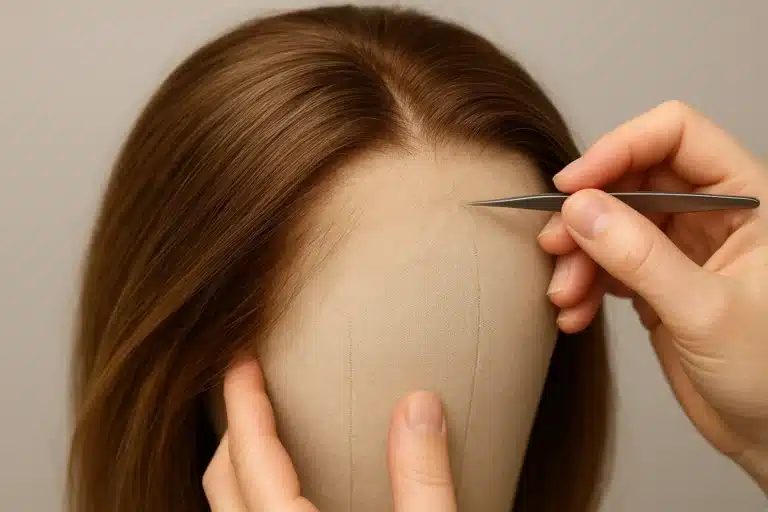
Learning how to make wigs look real often comes down to the art of plucking. This process involves using tweezers to remove excess hair from the hairline to create that graduated, natural density we discussed earlier.
Transformation Steps:
- Sectioning: Clip the bulk of the hair back. Pull forward a thin layer of hair at the hairline.
- Plucking: Using high-quality tweezers, alternate plucking hairs from this front section. Don’t pluck in a straight line; pluck sporadically to create irregularities.
- Baby Hairs: If you enjoy the look of baby hairs, trim a very small section of the front hair short (about an inch long) and use a toothbrush with edge control to swoop them. This helps camouflage the edge of the lace.
Issue 3: Fraying and Tearing (Lace Damage)
Lace is delicate by design—it has to be sheer enough to disappear against your skin. However, this sheerness makes it prone to fraying over time. If your lace is looking ragged, it can cast a shadow that makes the hairline visible.
Why Lace Frays
Fraying is usually caused by tension. Pulling the wig down too tight, scratching your scalp through the lace, or aggressive washing can snap the delicate grid.
Managing the Damage
If the fraying is minor, you can carefully trim the frayed edge with small embroidery scissors. Pro Tip: Use pinking shears (scissors with saw-toothed blades) to trim the lace. The zigzag pattern they create is actually harder for the eye to detect than a straight line.
If the lace is torn, you may need to learn how to fix a ratty wig or damaged frontal by sewing the tear with invisible thread or consulting a professional. However, significant fraying is often a sign that the wig is nearing the end of its lifespan or requires a professional repair service.
The Prevention Playbook: Stopping Issues Before They Start
The best way to troubleshoot is to prevent the issues from happening in the first place. Adopting a “skin-first” approach to your routine can double the lifespan of your install.
Skin Preparation
Before you apply any adhesive, your skin must be pristine. Use 91% alcohol to clean your forehead. If you have sensitive skin, use a skin protector spray (scalp protector) which creates a barrier between your skin and the glue.
Gentle Removal
Never rip your wig off at the end of the day. This is the fastest way to stretch and fray your lace. If you are wondering how to take a wig off safely, patience is key. Use a dedicated lace release spray or an oil-based remover. Saturate the hairline and let it sit for a few minutes until the lace slides off without resistance.
Frequently Asked Questions
Why does my wig cap slide back during the day?
This is often a friction issue. If you are using a nylon wig cap, it can slip against smooth hair. A wig grip band (usually made of velvet) can provide the necessary friction to keep your wig and cap in place. If you are unsure how to use a wig cap effectively with a grip, place the grip over the cap, slightly behind the hairline, to anchor everything down.
How do I hide the grid pattern of the lace?
The “grid” is the texture of the lace material. To hide it, you can bleach the knots (chemically lightening the dots where the hair is tied) or use a powder foundation that matches your skin tone on the inside of the lace. This helps blend the grid into your complexion.
Can I fix a wig that has stretched lace?
Stretched lace creates ripples and gaps. While you can try to shrink it slightly with a blow dryer on a moderate setting, stretched lace is difficult to fully restore. Prevention (avoiding pulling the wig too tight) is your best defense.
Your Emergency Hairline Kit
To ensure you are never caught off guard, keep a small “Emergency Hairline Kit” in your bag. It should include:
- Small travel bottle of 91% alcohol
- Q-tips
- A small tube of water-based lace glue or holding spray
- A melt band or satin scarf
- A travel-sized edge brush
Troubleshooting is part of the process. By understanding the mechanics of your wig and how it interacts with your skin, you can turn a potential hair disaster into a minor speed bump, maintaining that flawless illusion wherever you go.