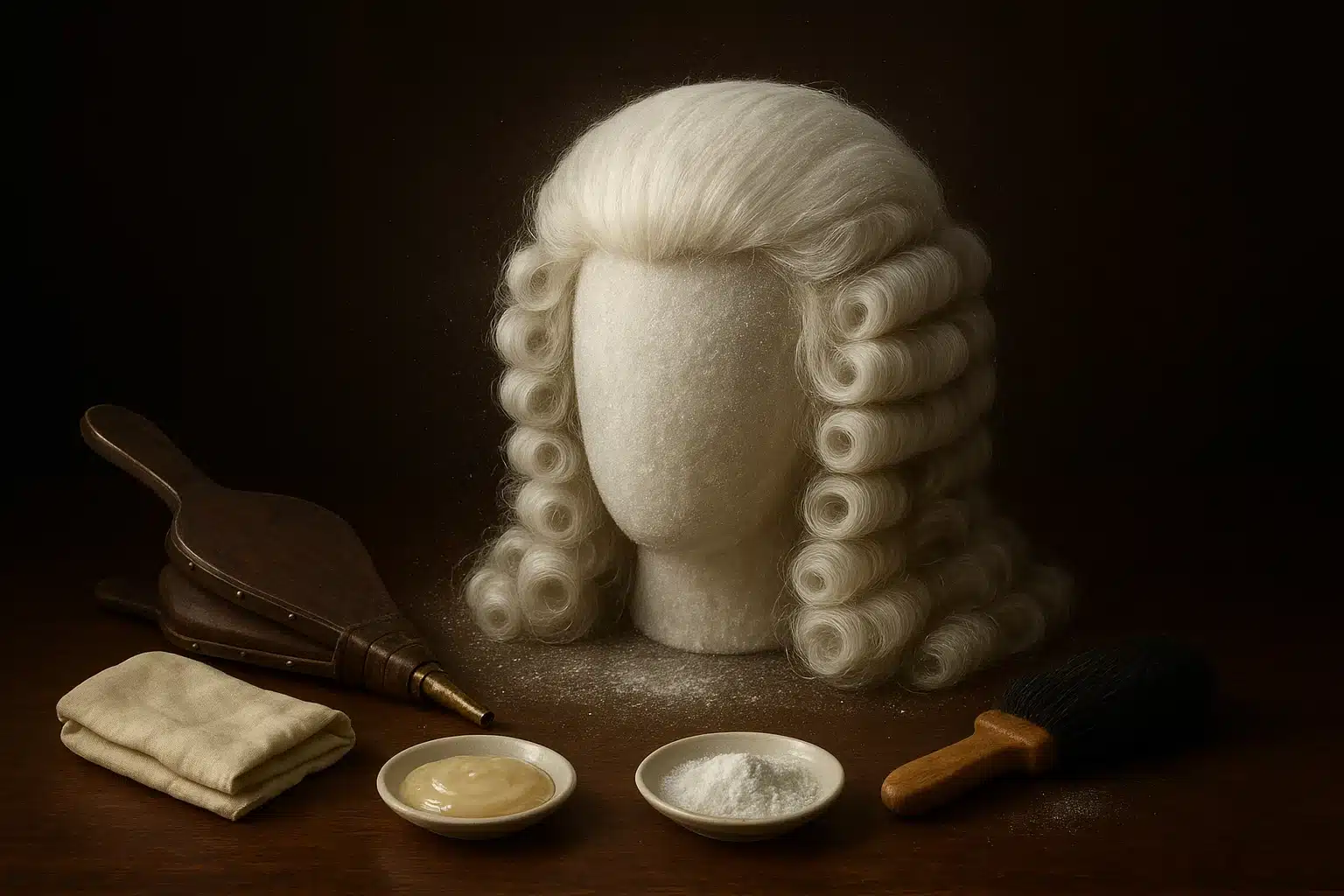
Imagine preparing for a glamorous evening out, but instead of reaching for a lightweight holding spray, you have to prepare a two-pound headpiece coated in animal fat and dusted with heavily scented starch. For the European elite of the 18th century, this wasn’t just a bizarre beauty ritual—it was an absolute daily necessity that required serious cosmetic chemistry.
While we often picture the powdered peruke as a simple, dusty relic of the past, the reality of wearing and maintaining these elaborate hairpieces was a complex science. Understanding the evolution of these styles requires looking at Wigs in European Nobility & Fashion: From Baroque Extravagance to Victorian Nuance, which provides the necessary context for how these elaborate headpieces became central to 18th-century court life. The powder wasn’t merely a decorative coating; it was a structural necessity designed to maintain the towering height, distinct color, and rigid curls of Baroque and Rococo fashion.
Let’s pull back the curtain on the “Powder Room” and explore the fascinating—and sometimes messy—chemistry, tools, and social tensions behind 18th-century wig powder.
The “Glue” Science: Why Wigs Didn’t Just Dust Off
If you’ve ever spilled flour on your clothes, you know it brushes off easily. So, how did 18th-century aristocrats manage to keep pounds of white powder clinging to their wigs through hours of rigorous court dances and humid carriage rides?
The secret was an ingenious, albeit heavy, bonding agent known as pomatum.
Before a single grain of powder touched the hair, the wig was thoroughly greased with pomatum—a thick paste typically rendered from animal fats like lard, beef marrow, or mutton tallow. From a chemical standpoint, the lipids (fats) in the pomatum acted as the perfect adhesive for the polysaccharides (starches) in the powder. The grease grabbed the powder, creating a sealed, opaque paste that dried into a stiff, sculptural finish. Without pomatum, the powder would simply fly away.
What Was Actually in Wig Powder?
While modern pop culture often jokes that aristocrats walked around with flour on their heads, the finest wig powders were sophisticated cosmetic blends.
- The Base: The cheapest powders were indeed made of finely milled wheat flour. However, the wealthy favored highly refined wheat or potato starches, which yielded a finer texture and resisted clumping in damp weather.
- The “Optical Brighteners”: To achieve that blinding, aristocratic white, wigmakers added finely ground cuttlefish bone and calcined sheep bone. These reflective minerals acted like 18th-century highlighters, making the hair catch the candlelight brilliantly.
- The Scent: Because the pomatum base was essentially animal fat, it could turn rancid over time. To combat the smell, powders were heavily perfumed. Orris root (which smells like violets), lavender, clove, and citrus oils were meticulously blended into the powder to ensure the wearer smelled like a walking botanical garden rather than a butcher shop.
Interestingly, bright white was generally reserved for men’s wigs. Women more commonly opted for powders tinted with charcoal or blue ochre, creating elegant grey, pale blue, or even soft pink hues that complemented their complexions.
Inside the Powder Room: Rituals, Bellows, and Cones
The application of this powder was so messy that aristocratic homes featured dedicated “powder closets.” The application process was a highly orchestrated ritual.
A servant or barber would begin by protecting the wearer. The aristocrat would cover their face with a large, funnel-like paper cone mask—complete with glass eye holes—to prevent inhaling the fine particulate matter or getting it in their eyes.
Instead of dusting the wig by hand, the powder was often blasted into the air using a specialized powder bellows. By aiming the bellows upward, the powder would cascade down gently and evenly onto the greased wig, mimicking a soft snowfall. This created a perfectly smooth, uniform coating without disturbing the tightly rolled curls.
Essential Maintenance Tools: Pig Bladders and Hog Hairs
Maintaining a powdered wig required tools that sound more suited to a farm than a vanity table.
Because dampness was the absolute enemy of starch, keeping wig powder dry was a massive priority. Long before the invention of airtight plastic containers, wigmakers used pig bladders for storage. When cleaned, stretched, and dried, a pig bladder became a remarkably effective, naturally waterproof pouch. It kept the starch perfectly dry and allowed for easy dispensing.
When it came time to clean the old, crusted pomatum and powder out of a wig, delicate combs simply wouldn’t cut it. Wigmakers utilized a tightly bound bundle of hog hairs. These incredibly stiff, durable bristles were perfect for scrubbing out the hardened fat and starch without tearing the delicate mesh foundation of the wig.
Bread vs. Beauty: The Social Tension of Flour Wigs
As the 18th century wore on, the use of wig powder shifted from a harmless fashion statement to a potent political symbol.
A high-society wig required about one pound of flour or starch for a proper dressing. During the late 1700s, Europe experienced severe agricultural shortages. While the working classes were literally rioting in the streets over the price of bread, the nobility were casually dusting pounds of edible flour onto their heads.
This stark contrast made the powdered wig a symbol of “starving the poor to decorate the rich,” heavily fueling the anti-aristocratic sentiments of the French Revolution. In England, the extravagant trend finally met its match in 1795 when the government introduced the Hair Powder Tax. To legally use hair powder, citizens had to purchase a certificate costing one guinea per year. Almost overnight, the powdered wig fell out of fashion, paving the way for more natural hairstyles.
From Historical Extravagance to Modern Confidence
Looking back at the history of wigs, it’s incredible to see how far the industry has come. The wearers of the 18th century endured heavy animal fats, stiff starches, and rigid social rules just to feel presentable in society.
Today, the world of hair replacement is defined by comfort, breathability, and empathy. Whether you’re searching online for a compassionate, expert provider with decades of experience, or seeking out a local wig store new orleans shoppers trust, the focus is entirely on your well-being. Modern synthetic fibers and ethically sourced human hair offer effortless, lightweight confidence—no pig bladders, pomatum, or powder bellows required.
At Wig Superstore, with nearly two decades of industry expertise, we believe that finding the perfect hairpiece shouldn’t be a cumbersome ritual. It should be an uplifting journey that helps you feel beautiful and entirely yourself.
Frequently Asked Questions About 18th-Century Wig Powder
Did powdered wigs attract bugs and lice?
Surprisingly, wearing a powdered wig was actually considered a hygienic choice for the era. Because lice need the warmth of a human scalp and blood to survive, they couldn’t live inside a wig that was regularly taken off and scrubbed with hog hair brushes. To wear these wigs comfortably, men usually shaved their natural hair completely bald, effectively eliminating the environment where lice thrive.
What is the “four-finger rule” for wig placement?
In the 18th century, proper wig placement was vital for communicating social status. The “four-finger rule” dictated that the front edge of the wig should sit exactly four finger-widths above the wearer’s eyebrows. Any lower, and you looked uneducated; any higher, and you looked comical.
Did the wigs smell bad?
If not properly maintained, the animal fat (pomatum) used to bind the powder could go rancid. However, wealthy individuals had their wigs regularly cleaned and re-dressed by professionals. Additionally, the copious amounts of floral and citrus essential oils blended into the powder effectively masked any unpleasant odors.
Can you recreate 18th-century pomatum safely today?
Yes! Historical costumers and reenactors often recreate pomatum using modern, skin-safe ingredients. Instead of animal fat, many use a base of refined shea butter or modern cosmetic waxes, blending them with arrowroot powder and lavender essential oil to achieve the historical look without the historical smell.
***
Are you curious about how modern wig craftsmanship compares to these fascinating historical methods? Explore our extensive collection of lightweight, breathable, and beautifully natural wigs today—designed not for the demands of an 18th-century court, but for your everyday comfort and confidence.