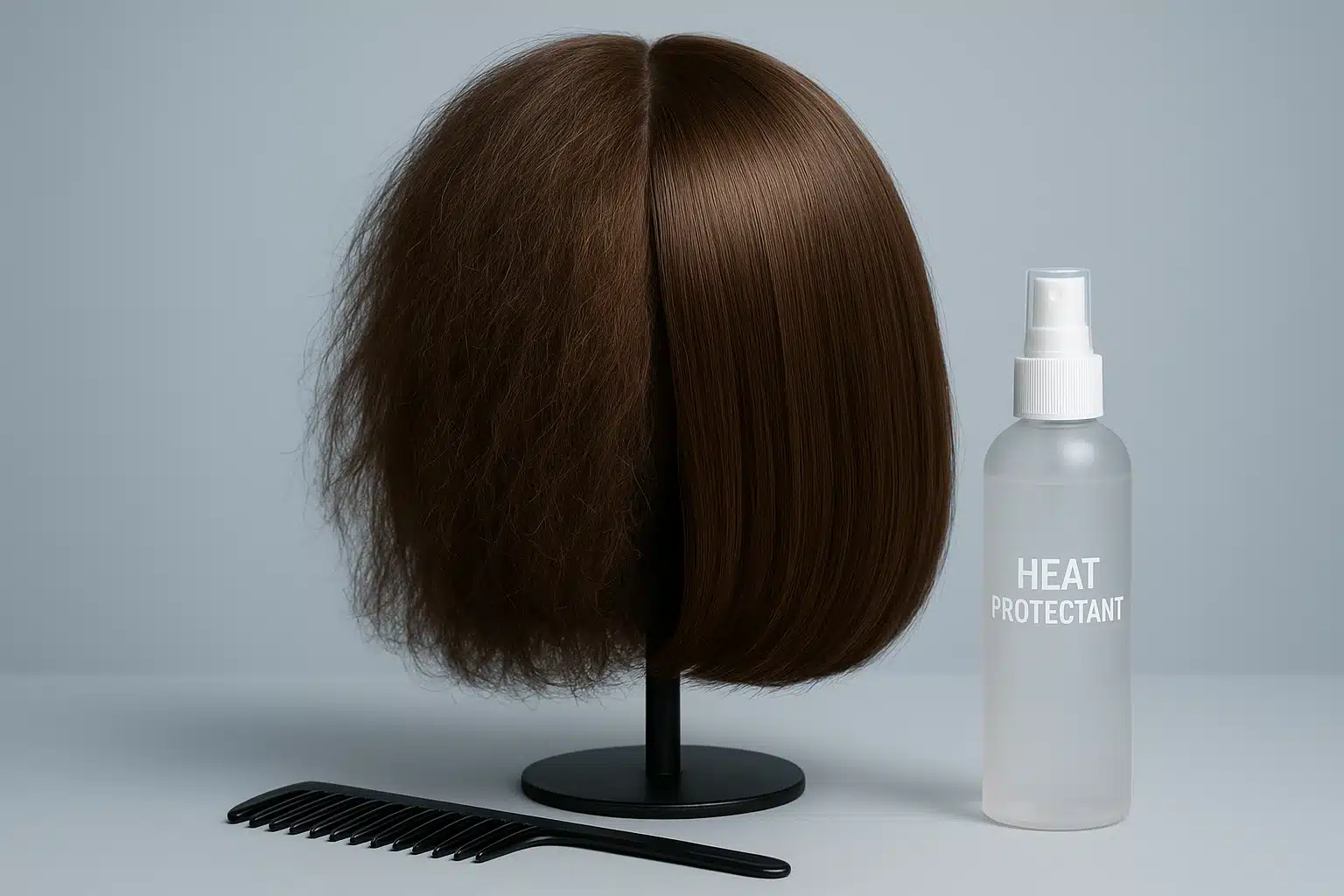
There is a specific moment of panic that almost every new wig wearer experiences. You’re getting ready for the day, running a comb through your style, and you notice more hair in the teeth of the comb than you expected. Or perhaps you run your fingers through the back of your hair and feel a rough, friction-like texture that wasn’t there last week.
For men wearing the “Him” collection, these moments can be disheartening. You invested in a high-quality piece to regain confidence, not to inherit a new set of worries. The good news is that most of these issues—shedding, tangling, and matting—are rarely signs that your wig is ruined. Instead, they are usually signals that your maintenance routine needs a slight adjustment. For a broader overview of the technology behind these systems and why they behave the way they do, it is helpful to reference The Definitive Guide to Him Wigs by HairUWear.
Understanding the unique science behind the fibers you are wearing is the first step toward longevity. By shifting from reactive “fixing” to proactive care, you can keep your look sharp and natural for months to come.
The Science of the “Him” Collection: It’s Not Just Plastic
To troubleshoot effectively, you have to understand the material. The Him collection primarily uses Excelle™ heat-friendly synthetic fiber. This is a significant upgrade from standard synthetic hair found on budget wigs.
Standard synthetics are set in their style permanently; heat destroys them. Excelle™ fibers, however, are a hybrid. They look and feel incredibly like biological hair—they are finer, softer, and have less unnatural shine. But this realism comes with a trade-off: friction sensitivity.
Because the fiber is designed to mimic the porous nature of human hair, it reacts to friction (rubbing against collars, pillows, or headrests) and heat (body temperature). Understanding this helps us solve the “Big Three” problems: shedding, tangling, and matting.
Problem 1: Shedding vs. Breakage
When you see hair falling out, it’s easy to assume the wig is defective. However, in the world of high-quality alternative hair, we have to distinguish between shedding (hair coming loose from the knot) and breakage (fiber snapping due to dryness).
The Mechanics of the Knot
Many Him wigs feature a hand-tied monofilament top or a lace front. This means individual hairs are hand-knotted into a fine mesh base. This construction offers the most realistic scalp appearance and movement, especially for lace front wigs where the hairline is exposed.
However, these knots are delicate. If you pull too hard while styling, or if you use products with high alcohol content that dry out the knot, the hair can slip free.
The Fix:
- Seal the Knots: If shedding is a recurring issue, verify you aren’t brushing near the base too aggressively.
- Product Audit: Ensure you are never applying conditioner or detanglers directly to the roots or the base. Conditioners are designed to loosen fibers—great for the ends, disastrous for the knots holding the wig together.
Problem 2: Tangling and “Friction Frizz”
Men often assume tangling is a long-hair problem. However, on shorter men’s styles, tangling manifests differently—usually as “friction frizz” at the nape of the neck or behind the ears.
This occurs because the Excelle™ fiber rubs against your collar or skin throughout the day. This constant friction generates heat and static, causing the fiber to curl up tightly at the microscopic level. To the touch, it feels dry, rough, or “crunchy.”
The Fix:
- Lubrication is Key: You cannot treat synthetic fiber with standard hair oil. You need a barrier. Using a daily leave-in spray specifically designed for synthetic hair helps reduce static charge.
- The “Bottom-Up” Method: When you do detangle, use a wide-tooth comb. Start at the very tips of the hair and work your way up toward the root. Dragging a comb from root to tip compresses tangles into tight knots that eventually snap.
Problem 3: Matting (The “Cold Crimp”)
Matting is the advanced stage of tangling. If friction frizz isn’t addressed, the fibers lock together. In the Him collection, matting is often mistaken for the hair being dirty, but washing it won’t fix the texture. The fiber has actually changed shape due to friction.
The Fix: Heat ResurfacingThis is the biggest “Aha!” moment for Him wig owners. Unlike standard synthetics that melt, Excelle™ fiber requires heat to maintain its structure.
If your wig feels rough or matted, washing it isn’t enough. You actually need to smooth the fiber back out using controlled heat.
- The 350°F Rule: The magic number for Excelle™ fiber is roughly 275°F to 350°F (135°C – 177°C).
- The Process: To remove frizz and preventing matting, you should periodically use a flat iron (set to the correct temperature) on the hair while it is wet with a heat-protectant spray. Running the iron through the fiber smooths out the microscopic friction damage, essentially “resetting” the hair to its original factory smoothness.
Note: Always check the specific manufacturer instructions for your specific wig model before applying heat.
Your “Barber-Style” Maintenance Schedule
To avoid these issues entirely, think of your wig maintenance like car maintenance. You don’t wait for the engine to smoke before changing the oil.
Daily
- Inspect: Check the nape area for signs of roughness.
- Reset: Use a wide-tooth comb to gently style.
- Protect: A light mist of leave-in conditioner/detangler for synthetic hair.
Weekly (depending on wear)
- Wash: Use cold water and a shampoo formulated specifically for synthetic hair.
- Condition: Apply a conditioner for synthetic wigs to the mid-lengths and ends only (avoiding the roots).
- Air Dry: Place the wig on a wig stand. Never brush a wig while it is soaking wet, as the fibers are heaviest and most prone to stretching the knots.
Monthly
- Heat Styling: Perform the heat-smoothing technique described above to remove any friction damage that has accumulated over the month. This keeps the fiber soft and prevents the “crunchy” texture from becoming permanent.
Frequently Asked Questions
Can I use regular drugstore shampoo on my Him wig?
No. Human hair shampoo is designed to strip oils from a biological scalp. Synthetic fibers do not produce oil, so regular shampoo will dry out the fiber, leading to brittleness and breakage. Always use products specifically formulated for synthetic wig care.
Why does the back of my wig feel rougher than the top?
This is normal wear and tear known as “friction point” damage. The back of the wig moves against your collar and neck constantly. This area requires the most attention regarding detangling spray and occasional heat smoothing.
Can I sleep in my wig?
It is generally recommended not to sleep in your wig. The friction between the fiber and the pillowcase is the fastest way to cause severe matting and shedding. If you must sleep in it, use a silk pillowcase to reduce friction, but understand this will significantly shorten the lifespan of the piece.
Continued Learning
Mastering the care of your Him wig transforms it from a daily accessory into a long-term investment in your confidence. The difference between a wig that lasts three months and one that lasts a year is often just a matter of understanding the fiber and respecting the heat limits.
As you become more comfortable with the routine, you’ll find that the “maintenance” becomes second nature—just another part of your grooming ritual that ensures you look your best every time you walk out the door.