When you first fall in love with a new wig, the focus is almost entirely on the style, the color, and that incredible boost of confidence you feel when looking in the mirror. It’s a transformative moment. However, much like buying a luxury car, the initial purchase price is just the entry fee. To keep that vehicle running smoothly, you need premium fuel and regular maintenance. Wigs are no different.
Many first-time wearers are surprised to learn that their “hair budget” doesn’t disappear once the wig arrives in the mail. In fact, understanding the total cost of wig ownership is vital for anyone looking to maintain that salon-fresh look beyond the first month. Whether you are navigating hair loss due to a medical journey or simply exploring high-fashion versatility, planning for the recurring costs of shampoos, conditioners, and styling aids will save you from “sticker shock” down the road and prevent premature damage to your investment.
The “Hidden Chemistry”: Why You Can’t Use Grocery Store Brands
One of the most common questions new wearers ask is, “Can’t I just use the shampoo sitting in my shower?” It is a fair question, but the answer lies in chemistry.
Standard shampoos are designed to strip excess oil (sebum) from your scalp. However, neither synthetic fibers nor human hair wigs have a scalp to replenish those oils. If you use a drugstore brand on a wig, you are essentially dehydrating it.
- For Human Hair Wigs: Standard sulfates strip the hair, leaving it brittle, dull, and prone to snapping.
- For Synthetic Wigs: These fibers are essentially high-grade plastics. Regular hair products can coat the fiber, create a waxy buildup, or even degrade the chemical structure of the strand, leading to the dreaded “clumping” effect.
Calculating the “Mistake Tax”
We often talk about the financial cost of products, but we rarely discuss the cost of errors. Using the wrong product can destroy a $300 synthetic wig in a matter of weeks. If a $15 bottle of wig-specific shampoo extends the life of your wig from three months to six, the return on investment is massive. Conversely, saving $10 on generic shampoo is a “false economy” if it forces you to replace your wig twice as often.
For those entering this world due to sudden medical changes—such as the increasing number of individuals researching hair loss post-medical treatments or vaccinations—this learning curve can feel overwhelming. Please know that these maintenance protocols aren’t just rules; they are insurance policies for your confidence.
The 12-Month Shopping List: A Granular Breakdown
To give you a realistic idea of what your annual budget should look like, we need to separate the two main categories of hair. The biology of the fiber dictates the budget.
1. Synthetic Hair Economics
Synthetic hair is generally lower maintenance, but it requires specific “style memory” products to combat friction.
The Essentials:
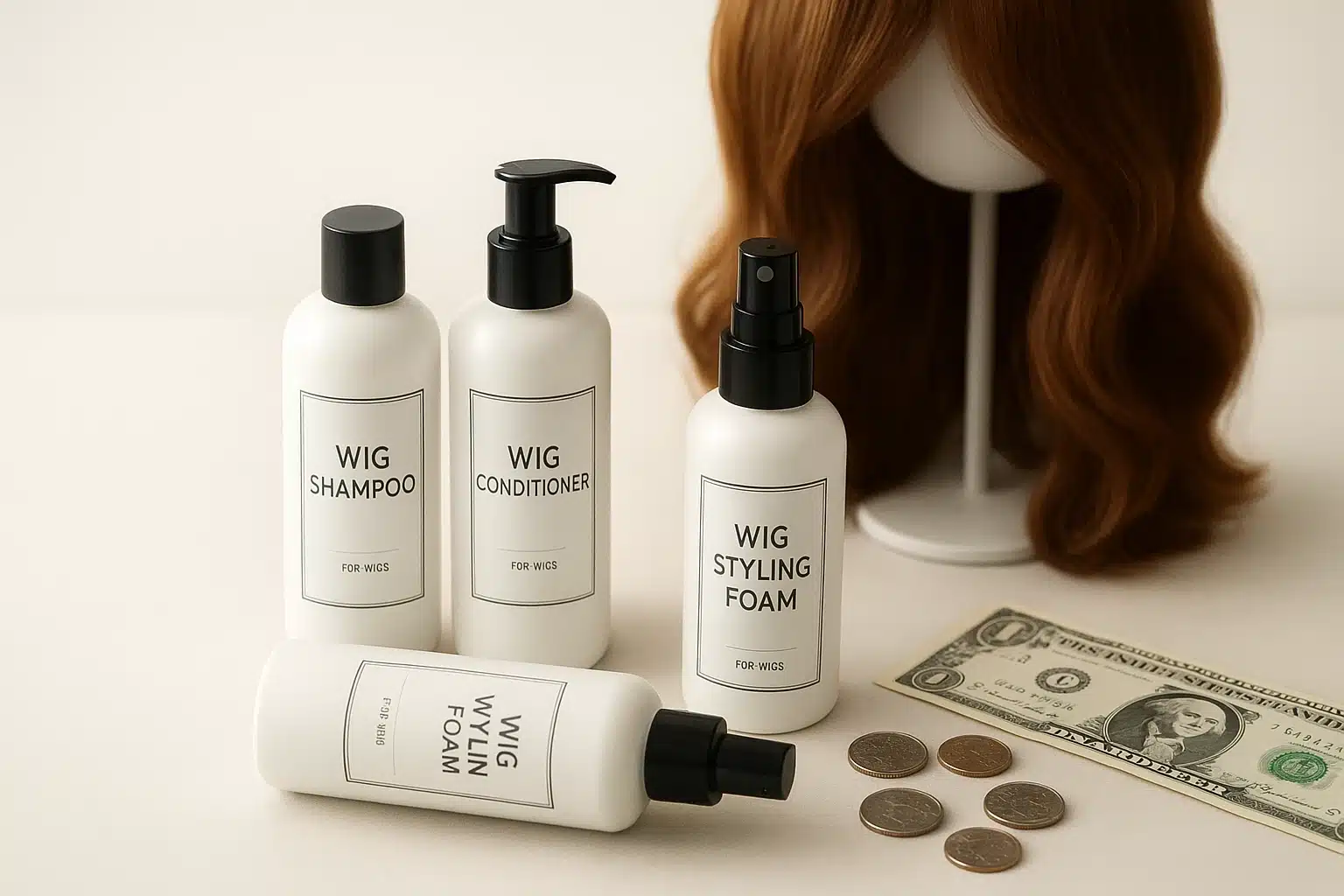
- Fiber-Safe Shampoo ($15 – $20 / bottle): You will likely wash your wig every 6-8 wears. A standard bottle typically lasts 3-4 months. Annual Cost: ~$60.
- Leave-in Detangler ($15 – $30 / bottle): This is your daily armor. Synthetic fibers rub against your collar and neck, causing “friction frizz.” A good leave in conditioner for synthetic wigs provides the slip needed to prevent tangling. Annual Cost: ~$90.
- Luster/Setting Spray ($15 – $20 / bottle): Essential for restoring the sheen after washing. Annual Cost: ~$40.
Estimated Annual Maintenance: $190 – $250
2. Human Hair Economics
Human hair wigs offer unparalleled realism, but they are “thirsty.” Because they are no longer attached to a biological nutrient source, you must manually supply all hydration.
The Essentials:
- Sulfate-Free Hydrating Shampoo ($20 – $40 / bottle): Quality matters here. You need gentle cleansing. Annual Cost: ~$100.
- Deep Conditioner/Masque ($25 – $45 / tub): Essential for weekly or bi-weekly deep treatments to keep the cuticle smooth. Annual Cost: ~$120.
- Argan Oil/Serum ($20 – $35 / bottle): Used daily to seal the ends and prevent splitting. Annual Cost: ~$70.
- Heat Protectant ($20 – $30 / bottle): Non-negotiable if you use heat tools. Annual Cost: ~$50.
Estimated Annual Maintenance: $340 – $450
Brand Tiering: Where to Save and Where to Splurge
Not all products are created equal, and knowing where your money goes can help you make smarter choices when stocking your wig care products cabinet.
- The “Reliable Daily” Tier (e.g., BeautiMark): These products are formulated to be “fiber-agnostic” or specifically clearly labeled. They are excellent mid-range options that balance cost with performance. A 3-piece care kit often runs around $50-$60 and is a great starting point for beginners.
- The “Technical” Tier (e.g., Jon Renau): Manufacturers like Jon Renau invest heavily in R&D. Their products are chemically engineered to match their specific fiber blends. If you wear a SmartLace wig, using Jon Renau wig care products often guarantees the best longevity because the pH levels are perfectly matched.
- The “Budget” Tier (e.g., Brandywine): These are older, legacy formulas. They work and are affordable, but they may lack the advanced UV protectors or sophisticated scents of the modern tiers.
The “Rotation Rule”: How Buying More Saves Money
This sounds counterintuitive, but the most effective way to lower your annual product cost is to own more than one wig.
If you wear a single wig daily, you are washing it weekly, heat styling it often, and subjecting it to constant environmental stress. This wig might last 4 months before it looks tired. However, if you rotate between two wigs, you aren’t just doubling the time; you are often tripling the lifespan.
Resting a wig allows the cap elastic to recover and reduces the frequency of washing. Fewer washes mean you use less shampoo and conditioner over the course of a year. The “Cost Per Wear” drops significantly when you rotate, turning a short-term expense into long-term savings.
Your “Wig-Smart” Annual Budget Template
To help you plan, here is a quick reference guide based on your lifestyle.
The “Fashionista” (Occasional Wear)
- Frequency: Wears wigs 1-2 times a week for events or changing looks.
- Wig Type: Mostly Synthetic.
- Annual Product Budget: $75 – $100.
- Priority: A good detangler and a travel-size shampoo.
The “Daily Professional” (Full-Time Wear)
- Frequency: Wears wigs 10+ hours a day, 5-6 days a week.
- Wig Type: High-quality Synthetic or Human Hair.
- Annual Product Budget: $300 – $500.
- Priority: Bulk-size shampoo, high-end conditioner for synthetic wigs, and a wide-tooth comb to prevent mechanical damage.
Frequently Asked Questions
Q: Can I use baby shampoo on my wig?
A: While baby shampoo is gentle, it is not pH-balanced for synthetic fibers or processed human hair. It can leave a dulling film and won’t provide the anti-static properties your wig needs to survive friction.
Q: How often should I really wash my wig?
A: Over-washing is a common mistake. A good rule of thumb is every 6-8 wears. If you aren’t sweating heavily or using a lot of hairspray, you can stretch this further.
Q: Is human hair more expensive to maintain than synthetic?
A: Generally, yes. Learning how to care for human hair wig styles involves more “hydration” products (oils, serums, masques) than synthetic hair, which mostly requires detanglers and simple cleansers.
Q: Do styling products expire?
A: Yes, usually after 12-18 months. If your serum has changed color or your shampoo smells different, toss it. Using expired products can cause buildup that is difficult to remove without damaging the wig.
The Bottom Line
Budgeting for wig care isn’t just about buying bottles of shampoo; it’s about protecting your image and your investment. By understanding the unique chemistry of your hair system and allocating a modest monthly budget for the right tools, you ensure that your wig looks as beautiful on day 100 as it did on day 1.
Ready to build your maintenance kit? Start by checking the fiber type of your current piece, and choose a care line designed to keep it vibrant for the long haul.