You carefully unbox your new Rene of Paris wig. The style is flawless, the color is vibrant, and the fibers move with a beautiful, natural sway. But fast forward two to four months, and you might find yourself facing a frustrating reality: the hair at the nape of your neck is starting to feel crunchy, the strands are standing up with static, and brushing it feels like a delicate operation.
If this sounds familiar, take a deep breath. You haven’t done anything wrong, and you certainly haven’t ruined your investment.
The challenges you’re experiencing are simply the natural physical responses of synthetic hair fibers to daily wear. In our nearly two decades of experience at Wig Superstore, we’ve found that the secret to extending the lifespan of your wig from three months to nine months doesn’t require magic—it just requires a solid understanding of how synthetic hair behaves.
Consider this your complete fiber survival manual. We’re going to dive deep into the science of your Rene of Paris wig, debunk common internet myths, and give you the practical tools to keep your hair looking exactly like it did on day one.
The Science Behind the Strands: Why Synthetic Hair Changes
To understand how to care for your wig, we first have to understand what it’s made of. Rene of Paris uses stunning, high-quality synthetic fibers—primarily in their coveted Orchid and Hi-Fashion collections.
Unlike human hair, which absorbs moisture and natural oils from your scalp, synthetic hair is essentially crafted from highly advanced micro-plastics. Because they are polymers, these fibers respond dynamically to their environment, specifically to friction and temperature.
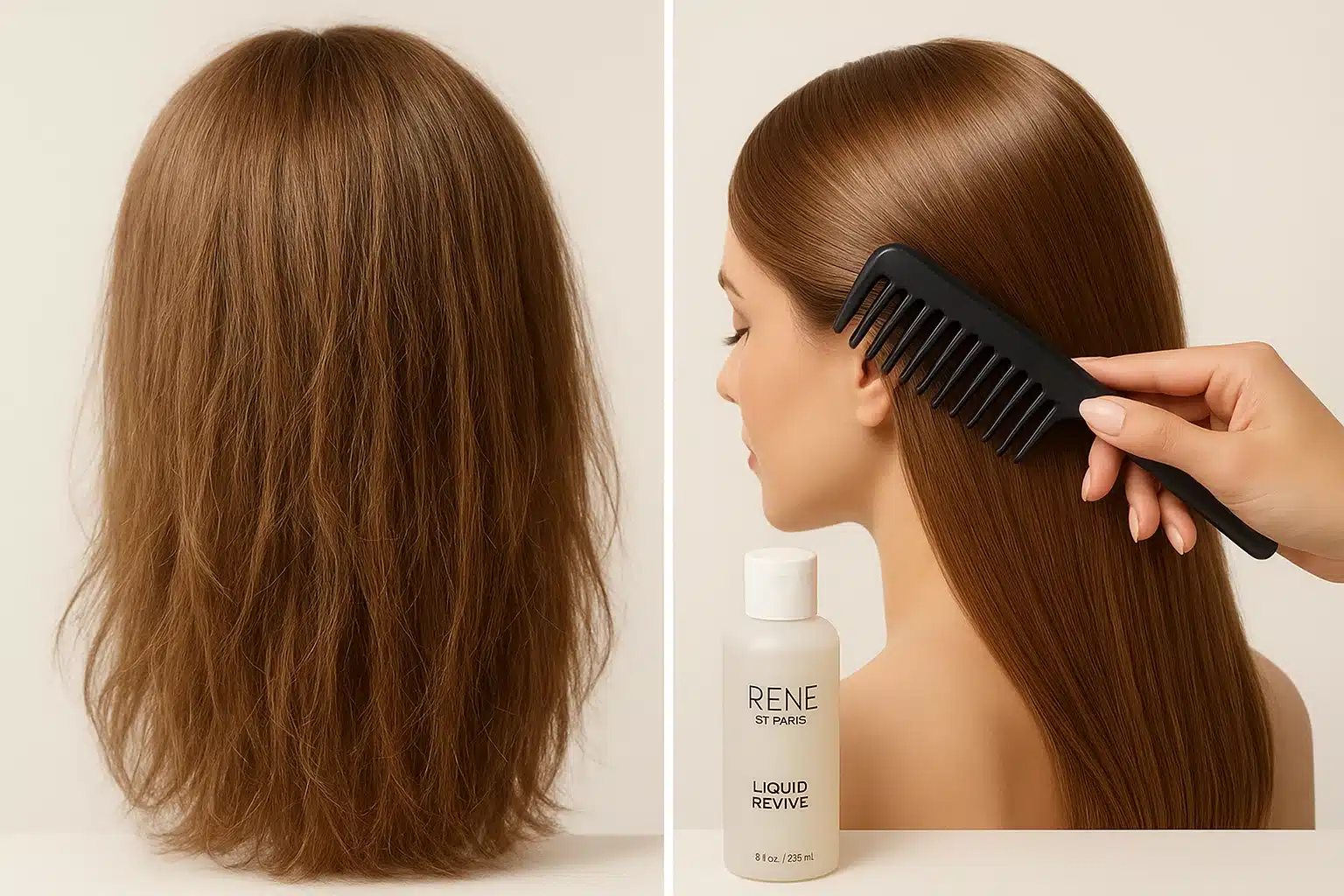
When your wig rubs against your collar, your scarf, or your shoulders, that friction creates tiny amounts of localized heat. Over time, this combination of friction and heat causes the microscopic surface of the synthetic fiber to warp and distort. This distortion is exactly what you see when you look in the mirror and think, “my synthetic wig is frizzy.”
Diagnosis: Is it Static or Frizz?
One of the biggest hurdles in beginner wig care is confusing static with frizz. Treating one with the solution for the other can actually make the problem worse. Here is how to tell them apart:
- Static (The Electrical Problem): If your hair is clinging to your face, floating upward, or reacting to your plastic comb, you have static. This is an electrical charge buildup caused by a lack of moisture in the air (common in winter). It requires an anti-static neutralizing spray.
- Frizz (The Physical Problem): If the ends of the hair look crimped, feel rough or crunchy to the touch, and tangle easily, you have frizz. This is physical damage to the fiber that requires a smoothing sealant to correct.
The “Nape Crisis” and The 4-Inch Rule
Almost every wig wearer experiences the “Nape Crisis”—that inevitable matting and tangling at the back of the neck. It is ground zero for friction because it’s where your body heat meets the constant rubbing of your clothing.
To stop nape matting before it starts, adopt The 4-Inch Rule.
Every single night when you take your wig off, do not just place it on its stand and walk away. Take a wide-tooth comb and focus exclusively on the bottom four inches of the nape. Gently detangle this specific section while applying a targeted protective spray. By addressing the micro-tangles in this four-inch zone daily, you prevent them from compounding into severe knots that require complex knotting solutions or professional repair.
The Liquid Revive Secret (And the Problem with Internet Hacks)
If you spend enough time on Reddit or community forums, you will eventually see users recommending “hacks” like washing synthetic hair with Dawn dish soap or soaking it in fabric softener.
Please put the fabric softener down.
While fabric softener makes clothes feel fluffy, it leaves a dulling, waxy residue on wig fibers that attracts dust and drastically shortens the lifespan of your piece. Harsh detergents like dish soap strip the factory-applied protective coating right off the synthetic strands.
When looking for the best wig care products, you need formulations specifically engineered for polymers. This is why Rene of Paris’s Liquid Revive is so highly recommended in the industry. It isn’t just a detangler; it is a silicone-based sealant. When friction causes microscopic tears and roughness on your wig’s fibers, the silicone in Liquid Revive acts like spackle, filling in those rough spots, restoring the factory slip, and bringing back the healthy shine.
Conquering the Fear of Curls: The Twist-to-Reset Technique
A major fear point for many beginners is brushing out curls. Many well-meaning guides will tell you “never brush a curly wig,” which ironically leads to massive tangling over time.
For the beautiful curls found in Rene of Paris synthetic wigs, you need to practice Sectional Finger-Brushing:
- Separate the hair into small, manageable sections.
- Mist lightly with your detangling spray.
- Using your fingers (or a very wide-tooth comb), gently work through the tangles starting from the bottom and moving up.
- The Secret Step: Once the section is detangled, follow the natural curl pattern and twist the hair around your finger. Release it, and the curl will perfectly snap back into its factory “memory” shape.
The Ultimate Rene of Paris Maintenance Calendar
To take the guesswork out of your wig maintenance, follow this simple schedule:
Daily
- Perform the 4-Inch Rule at the nape of the neck using a wide-tooth comb.
- Lightly mist with an anti-static spray if wearing in dry or winter conditions.
Weekly (or every 6-8 wears)
- Wash the wig using cool water and a brand-specific synthetic shampoo. (Note: The “cold water repairs wigs” myth is false. Cold water is simply safe because it won’t melt the fibers, but it doesn’t fix damage. Only proper products do).
- Condition the ends, avoiding the hand-tied knots at the base of the cap.
Monthly (or when shine fades)
- Apply a silicone sealant like Liquid Revive to the lower half of the hair to restore the smooth, frictionless surface.
A quick note on heat: Standard Rene of Paris fibers cannot be styled with traditional hot tools. However, if you have opted for heat friendly synthetic wigs, controlled low heat (around 270°F – 280°F) is actually required occasionally to smooth out friction frizz and reset the fiber structure.
Frequently Asked Questions (FAQ)
How long should a Rene of Paris synthetic wig last?
With proper daily maintenance and the right silicone-based products, a synthetic wig worn daily can last anywhere from 4 to 6 months. Wigs worn occasionally in rotation can last over a year.
Why does my wig look overly shiny when it’s new?
New synthetic wigs have a fresh, heavy factory coating. If you find it too shiny, you can lightly dust the crown with a translucent setting powder or dry shampoo to matte it down for a more natural look.
Can a steamer save a severely frizzy wig?
For standard synthetic fibers, professional and careful use of a handheld garment steamer (kept at a safe distance) alongside a fine-tooth comb can sometimes smooth out severely distorted ends. However, this is an advanced technique. If you hold the steam too close, you will permanently melt the plastic fibers.
Continuing Your Wig Education
Navigating hair loss or stepping into the world of alternative hair is a deeply personal journey. At Wig Superstore, we believe that education is the ultimate form of empowerment. When you understand the science behind your wig, fear is replaced by confidence, and daily maintenance transforms from a chore into a simple, mindful routine.
Remember, your Rene of Paris wig is an investment in your confidence, and with the right knowledge, you can ensure it stays as vibrant and beautiful as you are. Keep exploring, keep learning, and never hesitate to lean on expert resources as you master your wig care journey.