Imagine finding a hairstyle that looks perfect in the mirror—the color is radiant, the volume is ideal, and the style takes years off your appearance. Now, imagine taking it off two hours later because your scalp feels hot, itchy, and irritated. For many, this is the unfortunate reality of their first wig experience. But it doesn’t have to be.
It’s a common misconception that wearing a wig implies a trade-off: you get great style, but you have to endure discomfort. For those undergoing medical treatments like chemotherapy or living with alopecia, the scalp is often hypersensitive, making the texture of the material against the skin just as important as the look of the hair. Solving this requires looking beyond fiber type and color to the very foundation of the wig itself. To truly understand your options, it helps to explore the landscape of manufacturers, a topic we cover in depth in our guide on decoding premier wig brands.
The Anatomy of Comfort: Why the “Inside” Matters
When browsing for wigs, it is natural to focus on the exterior—the cut, the color, and the curl pattern. However, for a sensitive scalp, the most critical technology sits on the inside.
Think of a standard wig cap like an off-the-rack pair of jeans. It’s durable and functional, but it might have seams that rub or fabric that feels stiff. In contrast, a comfort-focused cap is like a tailored suit lined with silk. It is designed to move with you, breathe, and eliminate friction points.
To make an informed choice, you must understand the materials resting against your skin. The hierarchy of types of wig caps generally ranges from standard open wefting (least expensive, decent breathability, but rougher texture) to fully hand-tied constructions (most expensive, lightest weight, and softest feel).
Decoding Cap Features: A Glossary for Sensitive Scalps
Before we look at the specific brands, let’s define the features that create a “medical-grade” comfort level.
1. 100% Hand-Tied Caps
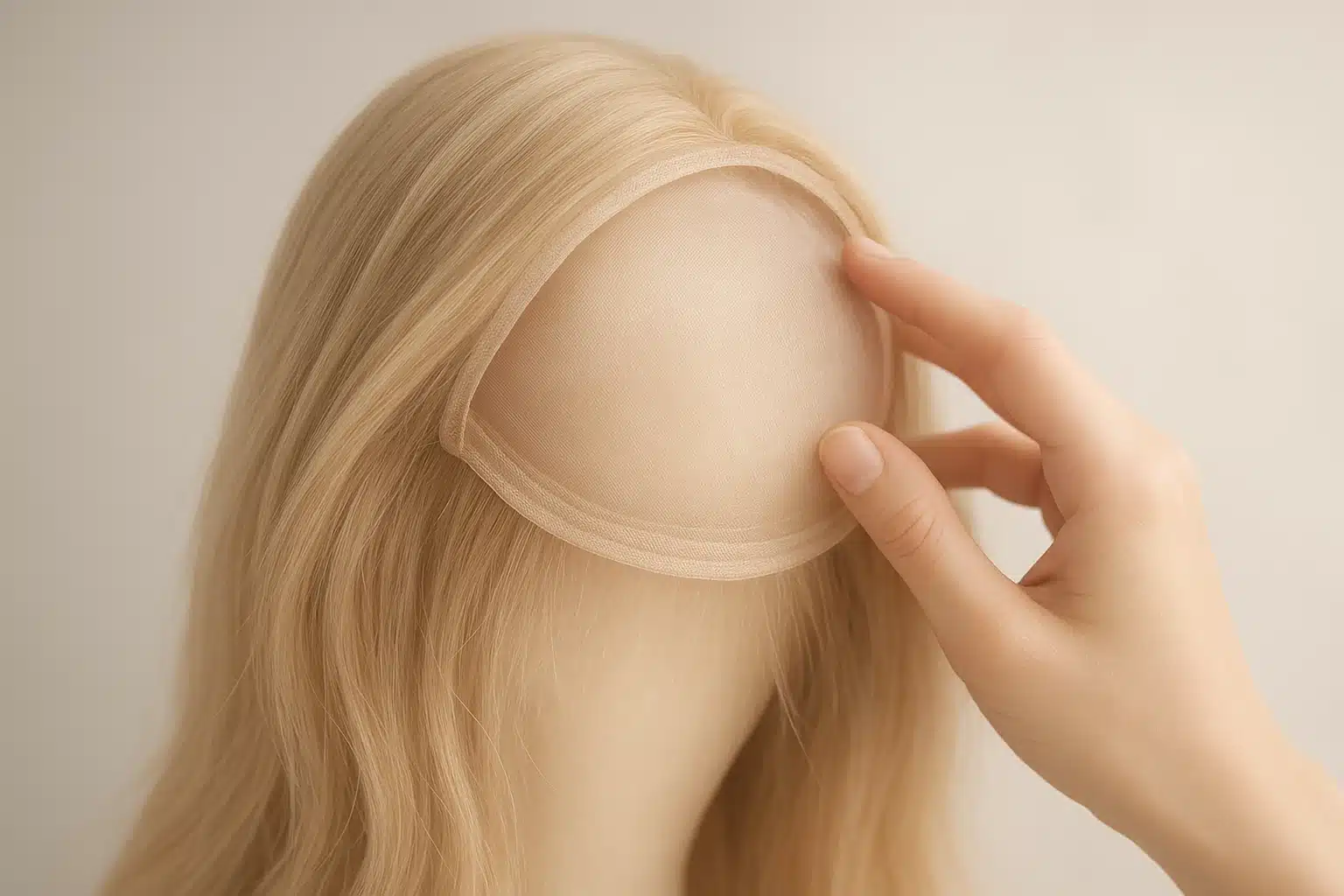
In this design, every single hair is tied by hand into a soft mesh cap. Because there are no machine-sewn tracks (wefts), the cap is incredibly soft and flexible. It moves like a second skin, eliminating the scratching sensation often caused by structural seams.
2. Double Monofilament
This is often the “aha moment” for new wig wearers. A single monofilament top allows the scalp color to show through for realism. A double monofilament top adds a second layer of fine, silk-like material on the underside of the wig. This extra layer covers the knots where the hair is tied, preventing them from rubbing against a tender scalp.
3. Lace Fronts (Swiss vs. Welded)
While lace fronts are primarily for a realistic hairline, the type of lace matters for comfort. High-end brands use “Swiss Lace,” which is finer and softer than the sturdy “welded lace” found on budget wigs.
The Leaders in Comfort: Which Brands Do It Best?
Not all wig manufacturers prioritize the same features. Some focus on durability, others on avant-garde styles. However, a select few have established themselves as leaders in creating comfortable wigs for sensitive scalp needs.
Jon Renau: The Innovator in Medical Hair Loss
Jon Renau is frequently cited as a top choice for those with total hair loss. Their reputation is built on their dedication to the “Double Monofilament” feature.
- Why they win: They offer a vast range of styles that combine a 100% hand-tied cap with a double monofilament top. This combination provides the “holy grail” of comfort: zero scratching from wefts and a silky barrier against the knots.
- Best for: Individuals with alopecia or those currently undergoing chemotherapy who need a cap that feels soft even without bio hair underneath.
Ellen Wille: European Design and Lightweight Density
Based in Germany, Ellen Wille brings a European approach to wig making. Their wigs are famous for having a lower hair density.
- Why they win: Less hair means less weight. A heavy wig can pull and create pressure points on a sensitive scalp. Ellen Wille’s Hair Society collection is specifically engineered for medical needs, featuring caps that are award-winning for their lightweight, near-weightless feel.
- Best for: Those who find standard wigs too heavy, hot, or “wiggy” looking and want a petite to average fit with sophisticated style.
Raquel Welch: The Memory Cap Specialist
The Raquel Welch brand focuses heavily on the user experience with their patented “Memory Cap” technology.
- Why they win: The Memory Cap III replaces the wide stretch lace used in most of today’s wigs with a thinner, more resilient stretch material. It actually molds to the shape of the head after about an hour of wear. This custom-like fit reduces shifting and sliding, which is a major cause of friction and irritation.
- Best for: Wearers who want a secure fit without the tightness that causes tension headaches.
Matching the Brand to Your Specific Needs
Understanding the brand landscape helps, but your specific situation dictates the final choice. Here is how to align your needs with the right solution.
If You Need Breathability Above All Else…
If your scalp tends to overheat, or if you are experiencing hot flashes, a 100% Hand-Tied cap is superior. The mesh allows air to circulate freely to the scalp.
- Brand to watch: Ellen Wille’s hand-tied models are renowned for airflow.
If You Need Absolute Softness…
If your skin is raw or highly reactive, you need a barrier between the hair knots and your skin.
- Brand to watch: Jon Renau’s Double Monofilament styles provide that critical layer of silk-like protection.
If You Are On a Budget…
Hand-tied and double monofilament wigs are premium investments. If you need a more budget-friendly option that doesn’t sacrifice comfort entirely, look for “Open Cap” or “Capless” constructions that utilize velvet-lined ear tabs and napes.
- Brand to watch: Noriko offers affordable styles with comfort features at key contact points (temples and nape).
A Practical Comfort Checklist
Before you make your decision, run through this quick checklist to ensure maximum comfort:
- Measure Twice: An ill-fitting wig is an uncomfortable wig. If a cap is too small, it will squeeze; too big, and it will chafe.
- Check the Lining: Does the product description mention “velvet-lined” ear tabs or nape? This velvet material is crucial for preventing irritation at pressure points.
- Consider a Barrier: Even with the best wigs, some days your skin might be extra sensitive. Using a bamboo or cotton wig cap liner can wick away sweat and add a protective layer between the wig and your scalp.
Frequently Asked Questions
Q: Will a synthetic wig be itchier than a human hair wig?
Not necessarily. The itch factor usually comes from the cap construction, not the fiber. A high-quality synthetic wig with a hand-tied cap will be more comfortable than a low-quality human hair wig with a basic cap.
Q: How do I stop my wig from slipping without using irritating glues?
Look for wigs with adjustable velcro or elastic tabs at the nape. For added security, a velvet “wig grip” band is a popular accessory that holds the wig in place using friction rather than adhesive, which is much gentler on sensitive skin.
Q: Do hand-tied wigs require special care?
Yes, because the construction is more delicate. When brushing, you must be gentle to avoid snagging the mesh cap. Proper wig care is essential to maintain the structural integrity and softness of the cap over time.
Q: Are expensive wigs always more comfortable?
Generally, there is a correlation. The labor required to hand-tie a wig or sew in a double monofilament top increases the cost significantly. However, these features are directly responsible for the lightweight, seamless feel that sensitive scalps require.
Finding the right wig is a journey of education as much as it is of style. By prioritizing the construction of the cap and choosing brands that understand the medical necessity of comfort, you can find a hair solution that feels as good as it looks.