We have all been there. You look in the mirror, and your style is flawless—volume, shine, and the perfect silhouette. But step outside on a humid August afternoon, or five minutes into a cardio session, and the reality shifts. The “sauna effect” kicks in. Heat gets trapped, your scalp starts to itch, and suddenly, maintaining that beautiful look feels like an endurance test.
It is a topic that doesn’t get enough attention in the glossy magazines, but managing the micro-climate of your scalp is just as important as the style itself. Achieving true comfort isn’t just about the hair; it’s about creating a healthy, breathable environment. A crucial part of optimizing wig comfort: liners, caps & scalp health is mastering the art of heat management. By understanding which materials work with your body’s natural cooling systems, you can stay comfortable and confident, no matter what the thermometer says.
The Science of Sweat: Why Wigs Get Hot
Before we dive into solutions, it helps to understand the physics of the problem. Our bodies cool down primarily through evaporative cooling. When you overheat, your scalp sweats. In a perfect world, air flows over that moisture, it evaporates, and your skin temperature drops.
Wigs, by their nature, act as insulators. Traditional wig caps can interrupt this airflow, trapping both the heat radiating from your head and the moisture trying to escape. The discomfort you feel isn’t just “being hot”—it’s the humidity rising between your scalp and the wig base. Therefore, the goal of a great liner or cap isn’t just to cover your hair; it is to facilitate that crucial evaporation process and wick moisture away from the skin.
Material Matters: A Breakdown of Fabrics
Many first-time wearers assume that all wig caps are created equal, or that the thin nylon stocking cap that came with the box is their only option. In reality, the material you choose makes a massive difference in how you feel at 4:00 PM compared to 9:00 AM.
Here is how the most common materials stack up when the heat is on:
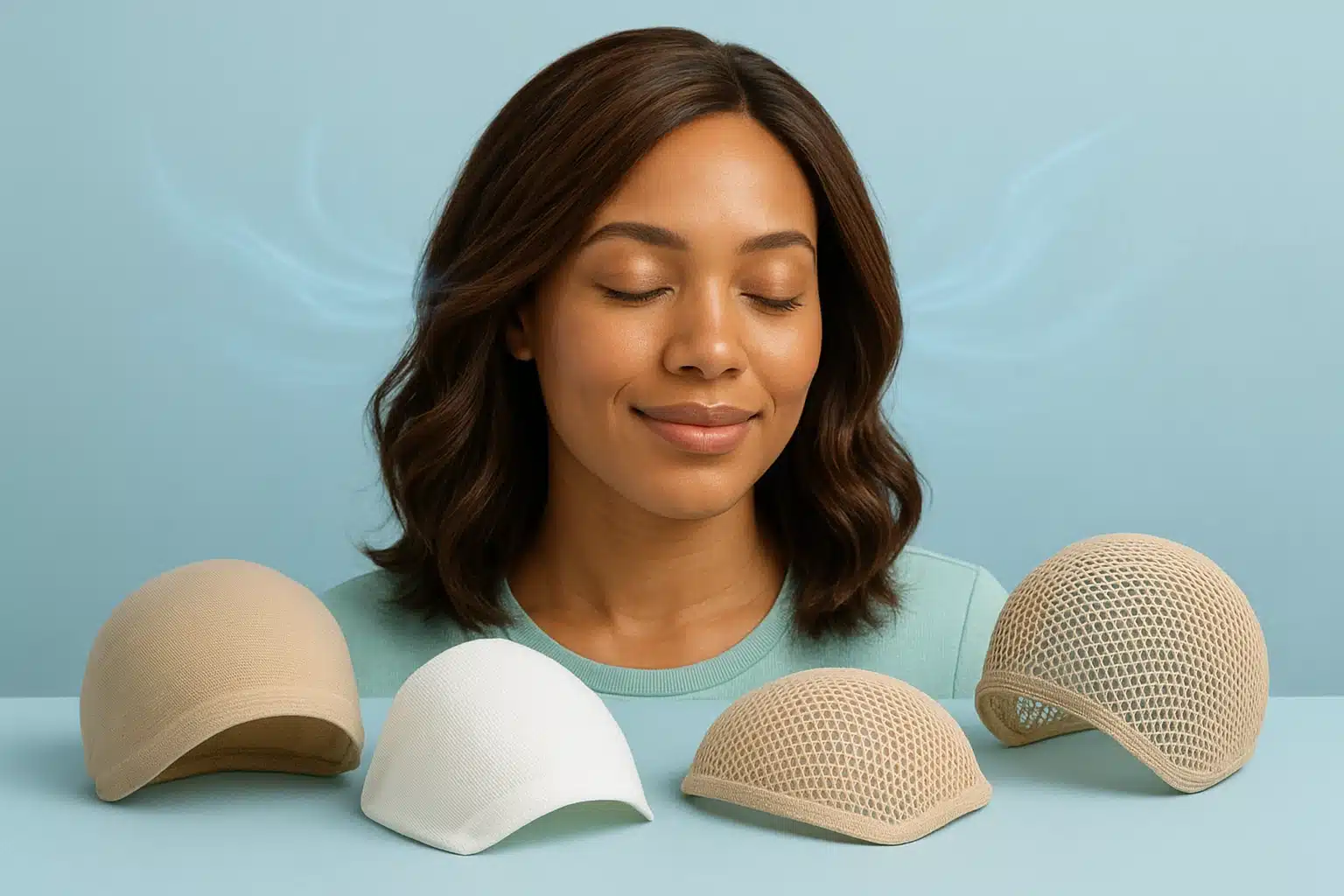
Nylon
This is the standard material for most basic wig caps. While it is excellent for keeping biological hair flat and creating a smooth surface, nylon is a synthetic fiber that tends to trap heat. It acts as a barrier rather than a conduit for air.
- Verdict: Best for short-term wear or cooler climates; often too hot for summer or exercise.
Cotton
Cotton is famous for being breathable and absorbent. However, there is a catch. Cotton holds onto moisture. Think of a wet towel—once it soaks up sweat, it stays damp and heavy against the skin.
- Verdict: Good for breathability, but can become uncomfortable if you sweat heavily, as it loses its shape when wet.
Bamboo Viscose
This is often considered the “gold standard” for comfort. Bamboo fibers are naturally porous, meaning they wick moisture away from the skin to the outer surface where it can evaporate. It is also naturally antibacterial (reducing odor) and incredibly soft, making it ideal for sensitive scalps.
- Verdict: The top choice for heat management and scalp health.
Mesh / Fishnet
These caps are all about airflow. Because they are full of holes, they allow heat to escape freely. However, they offer zero sweat absorption.
- Verdict: Excellent for ventilation, but you may need a sweatband if perspiration is your primary concern.
Material Comparison Matrix
| Feature | Nylon | Cotton | Bamboo | Mesh |
|---|---|---|---|---|
| Breathability | Low | High | High | Very High |
| Moisture Wicking | Low | Low (Absorbs) | Very High | N/A |
| Scalp Cooling | Low | Medium | High | High |
| Softness | Low | Medium | Very High | Low |
Matching Your Liner to Your Lifestyle
Just as you wouldn’t wear wool socks to the beach, you shouldn’t rely on a single type of liner for every situation. Customizing your choice based on your daily activity is the secret to longevity and comfort.
The Active Wearer (Gym, Hiking, LARPing)
If you are moving, you are sweating. The priority here is security plus wicking. A bamboo liner is often best because it keeps the scalp dry, preventing the “slip” that happens when sweat accumulates. Some active users layer a mesh cap over a bamboo headband to get the best of both worlds: airflow on top and sweat absorption at the hairline.
The Tropical Climate Resident
Living in high humidity requires maximum airflow. A liner might feel like “one too many layers.” In this case, opting for a wig with open-wefted construction is key. If you must wear a cap for biological hair containment, a fishnet or mesh liner allows the breeze to reach your scalp.
Sensitive Scalps & Total Hair Loss
For those with alopecia or undergoing chemotherapy, the scalp is often more sensitive to friction and temperature changes. Nylon can feel scratchy and irritating. A soft bamboo or cotton-blend liner provides a protective barrier between the scalp and the wig’s interior, preventing irritation while managing temperature.
Pro Tips & “Cooling Hacks”
Beyond buying the right liner, there are several strategies veterans use to beat the heat.
- The Freezer Trick: If you know you have a hot day ahead, dampen your bamboo liner slightly, place it in a sealed bag, and pop it in the freezer for 20 minutes before wearing. It provides an immediate cool-down effect while you get settled.
- Scalp Prep: An oily scalp feels hotter. Use a witch hazel toner on your scalp before putting on your liner to remove excess oils and create a fresh, clean base.
- Wig Construction: The liner can only do so much if the wig itself is heavy. The best human hair wigs often feature 100% hand-tied caps or monofilament tops, which are significantly lighter and more breathable than standard machine-made wigs.
- Rotation: Just like shoes, wigs and liners need to air out. If possible, rotate between liners throughout the day if you are sweating profusely.
Frequently Asked Questions
Q: Does wearing a wig cap actually make you hotter?
A: It depends on the material. A nylon cap can add heat. However, a moisture-wicking bamboo cap can actually keep you cooler than wearing the wig directly against the scalp because it pulls hot sweat away from your skin, facilitating evaporation.
Q: How do I stop sweat from running down my face?
A: Look for “wig grippers” or headbands made from velvet or bamboo. These are designed to sit at the hairline and act as a sweatband, absorbing moisture before it breaks the seal of your wig.
Q: Can I wash my wig liner?
A: Absolutely, and you should! Oils and salts from sweat can build up in the fabric, reducing its breathability. Wash them after every use in warm weather. Treat this as part of your standard wig maintenance routine.
Taking the Next Step
Comfort is personal. What works for a winter evening gala might not work for a summer barbecue. We encourage you to treat your wig experience as a journey of discovery. Experiment with different liner materials and see how your scalp reacts.
As a hair superstore dedicated to your confidence, we believe that you shouldn’t have to suffer for style. By pairing the right high-quality wig with the correct foundation, you can stay cool, collected, and confident all day long.